
“We can come here and remember. We make them immortal when we remember.”
Park Ranger Jerry Holsworth
Near Sharpsburg, just a few miles from my home among dusty farm roads a series of battles occurred. A war was raging to preserve democracy and emancipate an enslaved population and its’ bloodiest day occurred near my home. I walk the fields of Antietam National Battlefield almost daily. I pass the locations where soldiers were interred in shallow graves, where crops and farms were looted, destroyed by the clash of bodies, where fires were intentionally set to hamper the progress of the enemy. Today it is difficult to visualize the carnage.
The battles fought in these fields continue to define and divide the country, but nature and farmers persist in the seasonal rhythms while the park service strives to return the homes and acreage to its’ appearance prior to the battle.
Over the years I have found the natural beauty of the landscape, the memory of the battles fought, the lives lost, and the lives forever altered to be a recurring inspiration. I look always for the textures, the surprises that the familiar affords. The play of light, the contrast of surfaces are the subjects of my work. Walking a place, returning over and over gazing upon the same landscape year after year I notice the changes that occur throughout the year, the month, the day.
The land, and my walks have provided a path to grace in our embattled society. My walks help me attain a new perspective. I am not the first to document this historic place, nor the first to feel the pull of history and timeless quality that persists among these rolling hills. I celebrate this place and strive to contribute to the immortal story the landscape reveals. My art is a kind of homage to the land and its’ stories, a way of preserving memories.
Dr. Bushrod Washington James a surgeon who attended the wounded after the battle returned in 1895 like many survivors who made pilgrimages to remember. He wrote: “To-day I am gazing upon the rich harvest of peace and its happiness and prosperity. Well may we pray and trust that our beautiful land shall never again be marred by contention and bloodshed.”
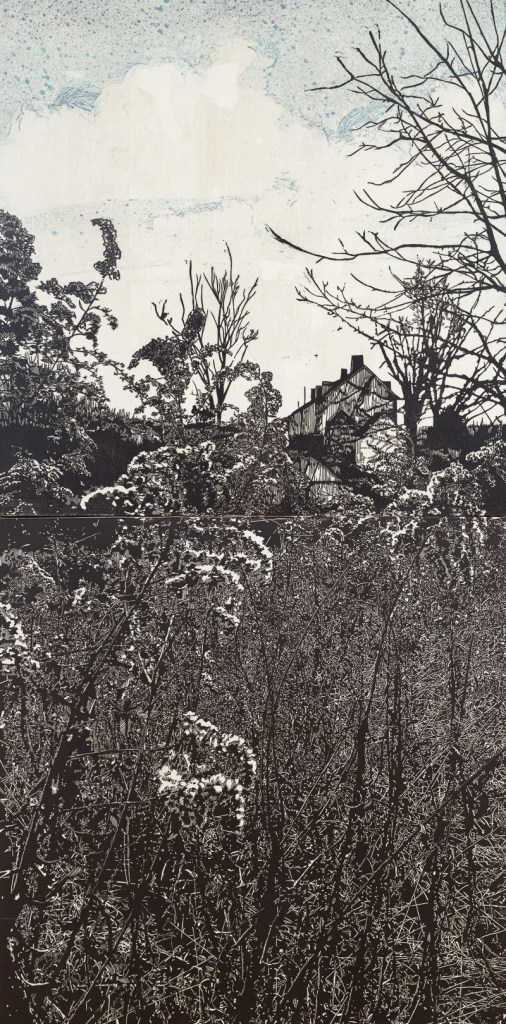
Roulette Farm
Roulette reported that 700 soldiers were buried on his property alone.
Linoleum print with intaglio
24” w x 48” h (a diptych of two prints attached to form a scroll)
$1,000.00
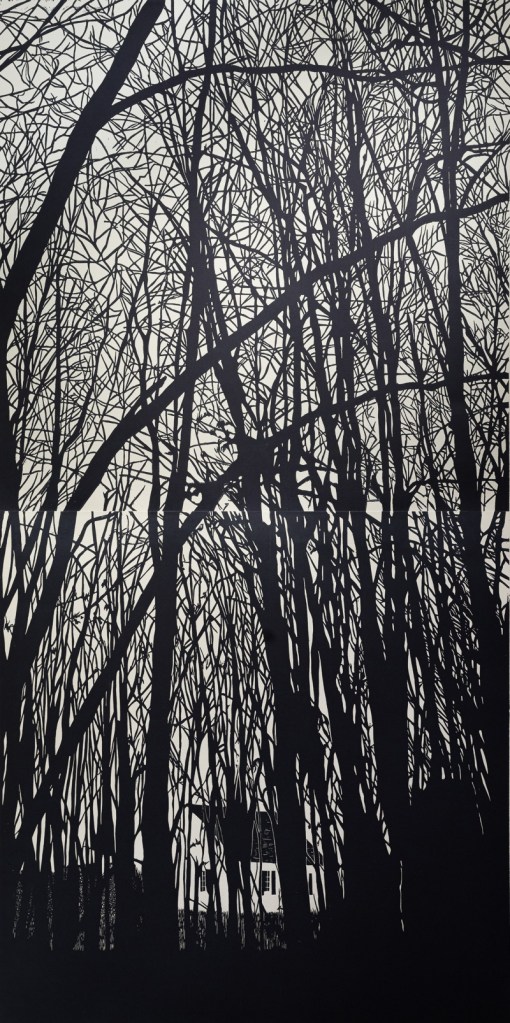
The Dunkers Church
“That night we lay in line of battle behind a small brick church called Dunkers Church, situated on the Hagerstown Pike, with arms and ready to move at any moment.” William Shakenbery, Private 14th Louisiana
Linoleum print
24” w x 48” h (a diptych of two prints attached to form a scroll)
$1,000.00
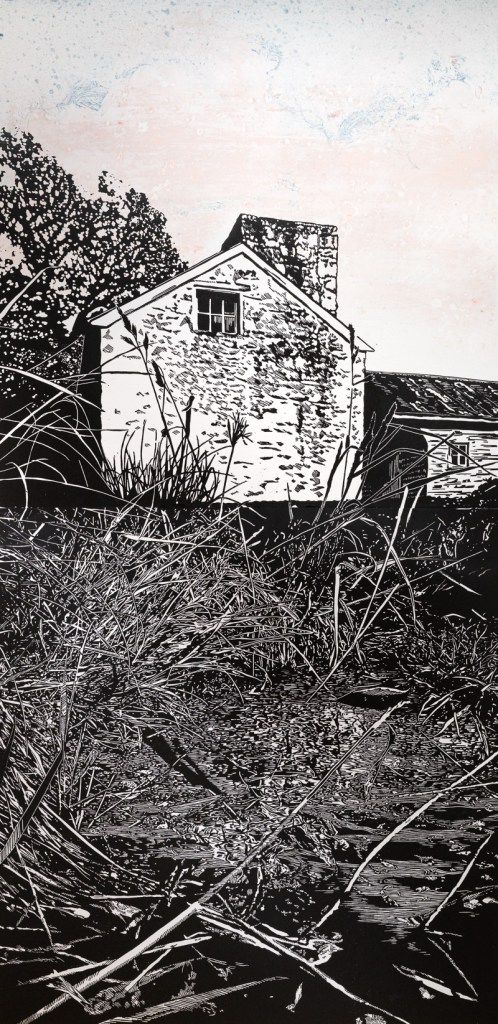
Mumma Spring House
All that remained of their once prosperous farm was the stone shell of their springhouse and three brick walls of their home.
Linoleum print
24” w x 48” h (a diptych of two prints attached to form a single image)
$1,000.00
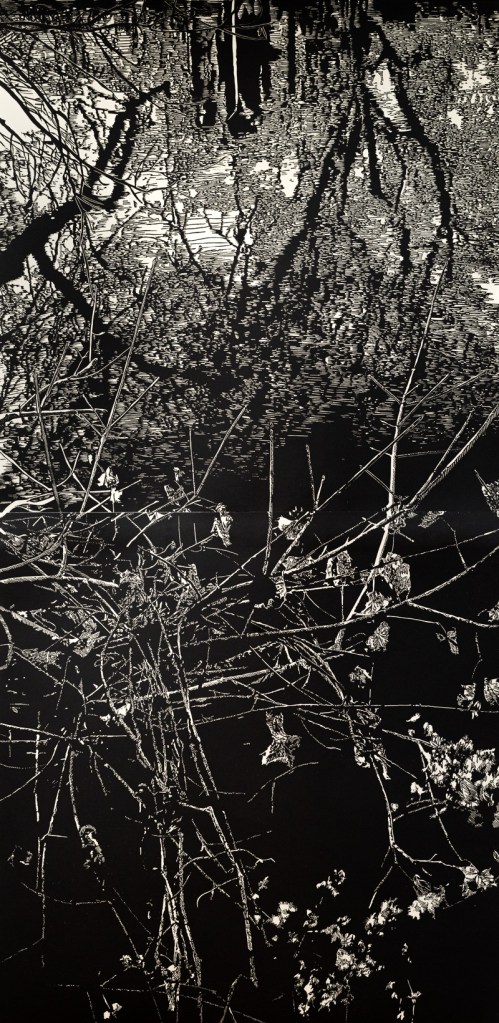
Tangle at Antietam
“That evening (Sept. 17, 1862) over 23,000 Union and Confederate wounded and dead covered the fields around Sharpsburg. Both armies maintained almost the same positions as they did when the day began”. Gen. James Longstreet, Army of Northern Virginia
Linoleum print
24” w x 48” h (a diptych of two prints attached to form a scroll)
$1,000.00

Rohrbach or Lower Bridge
“all who attempted to cross it found eternity”
Linoleum print
24” h x 44” w
$1,000.00
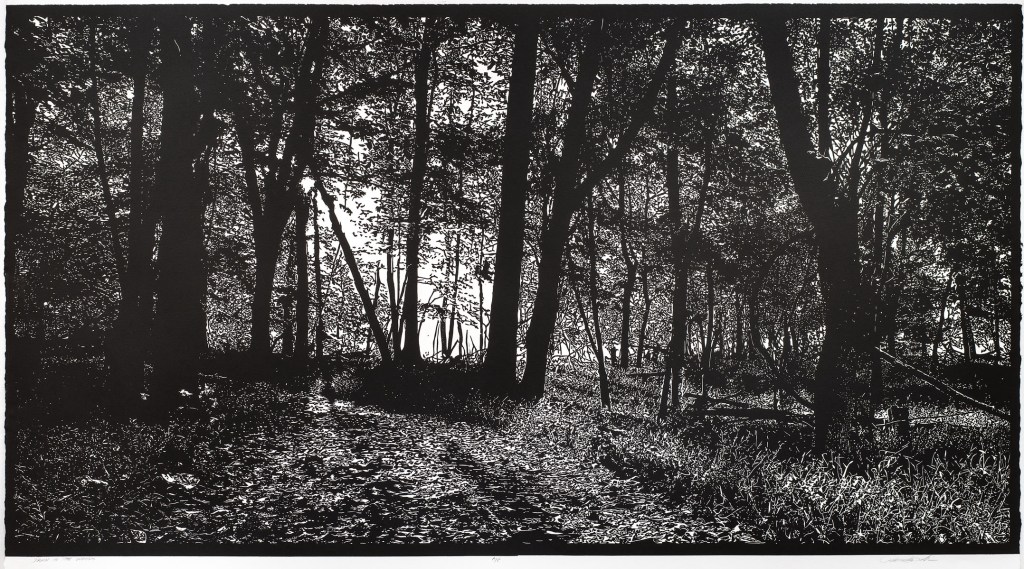
Dawn in the Woods
“The morning came in like the beginning of the Last Day, gray and dark and tensely expectant. Mist lay on the ground, heavy as fog in the hollow places, and the groves and valleys were drenched in immense shadows. For a brief time there was an ominous hush on the rolling fields, where the rival pickets crouched behind bushes and fence corners, peering watchfully forward under damp hat brims.” Bruce Catton, Sep 17 1862 From Mr. Lincoln’s Army by Bruce Catton. New York: Anchor Books 1990.
Linoleum print
Image 44”w x 24”h on 44”w x 30”h Rives BFK
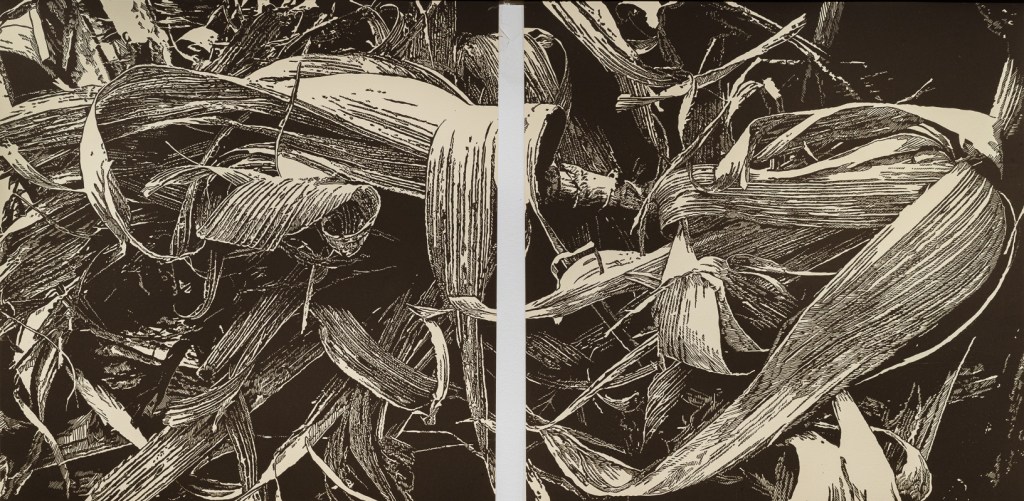
The Fallen
“In the time that I am writing every stalk of corn in the northern and greater part of the field was cut as closely as could have been done with a knife, and the slain lay in rows precisely as they had stood in their ranks a few moments before.” Union Gen. Joseph Hooker
Linoleum print
24” h x 48” w (a diptych of two panels each 24” x 24”)
$1,000.00

Antietam Encounter
Confederate General Gen. Robert Toombs reported, “was repulsed with great slaughter and at regular intervals… other attempts of the same kind, all of which were gallantly met and successfully repulsed…”
Linoleum print
60” w x 44” h (a diptych of two prints each 30” w x 44” h)
$2,500.00

D.R. Miller Farm and Sheep
David R. Miller, his wife Margaret and their six children lived in this two-story house along what was in 1862 the newly created Hagerstown Pike which separated the Miller house from the barn. His cornfield was the site of 4 hours of intense fighting that resulted in 8 thousand men killed or wounded. The field became a gravesite making it difficult for Miller to farm his land for several years. Today farmers lease the land and run cattle, sheep and raise crops including corn on the Miller farm. There is no evidence D. R. Miller raised sheep, but the presence of sheep near the house always suggests to me the peaceful and rhythmic nature of life prior to the battle.
Linoleum print
24” x 24
$800.00
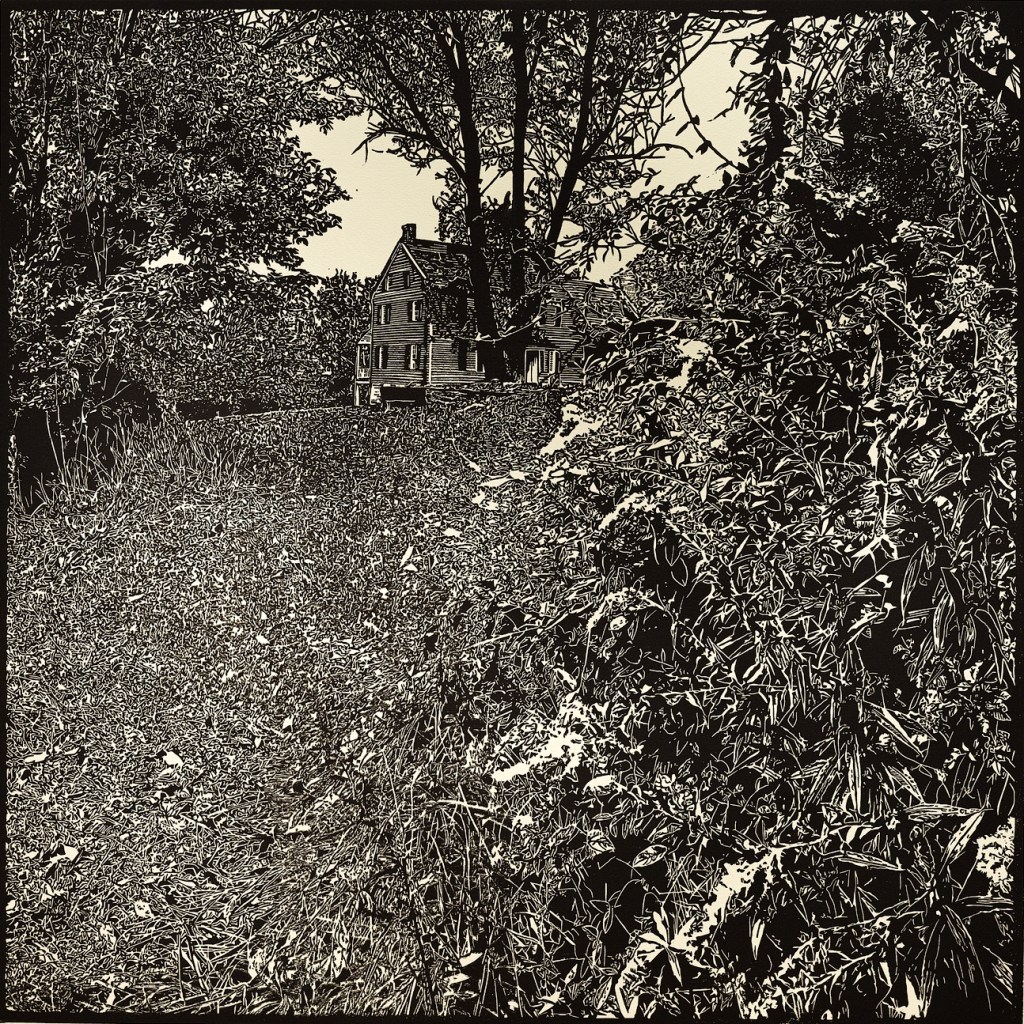
Otto Farm
I have depicted the Otto House from the rear as it might have been approached through the cornfield and orchard by confederate soldiers looking for food and other resources. The Otto Family owned two enslaved people who assisted their six children in working their farm. The slave known as Aunt Nancy managed the house and took care of the Otto children and her enslaved son; Hillary provides the stories that provide a better understanding of the Otto Farm at the time of the battle. The family like many in Sharpsburg abandoned their farms and houses in anticipation of the battle. Hillary remembered that he returned on the evening of the September 16, 1862, to check on the house and found someone had broken in! Hillary confronted the young soldier who then “left after a scolding, without saying a word.” Otto himself wrote “my house, bar, and granary were taken possession of…and used for a hospital purpose until November 4, 1862, during which time everything in and around it that could be of any service, was taken and used, including beds, furniture, and commissary stores.”
Linoleum print
24” x 24
$800.00

Reflections on Winter Along the Creek
Linoleum print with blend roll
24” x 24
$800.00
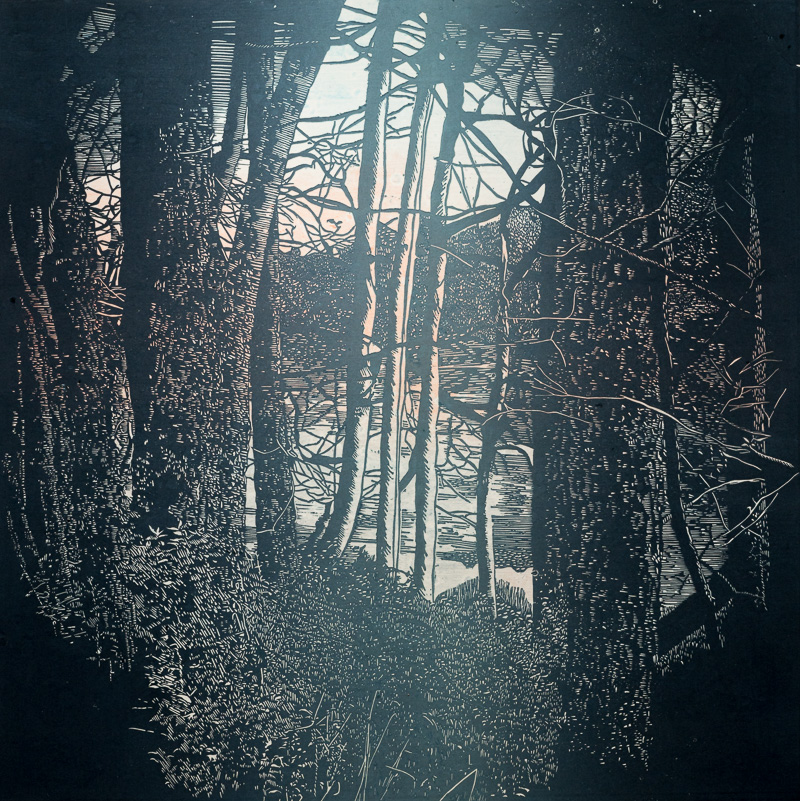
A Hole in the Woods
Linoleum print with blend roll
24” x 24”
$800.00
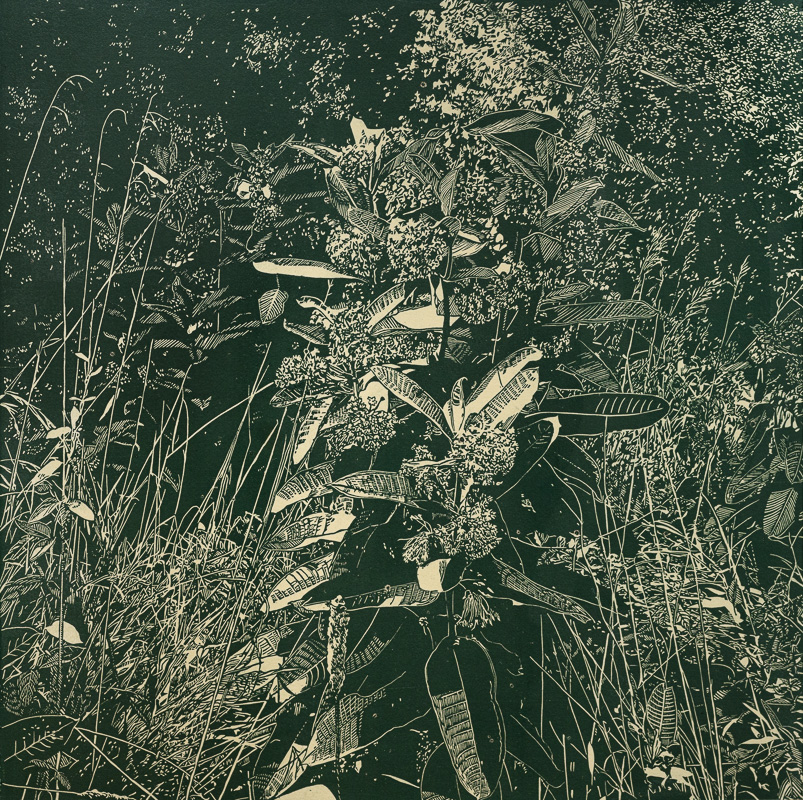
Resilience – Milkweed
Linoleum print
24” x 24”
$800.00
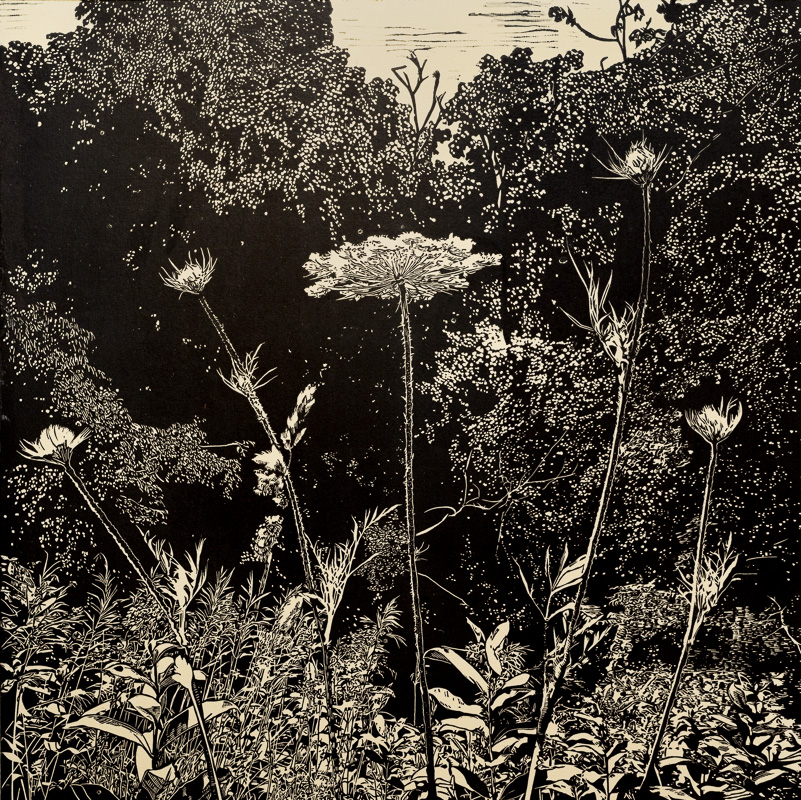
Queen Annes Lace Among the Thistles
Linoleum print
24” x 24”
$800.00
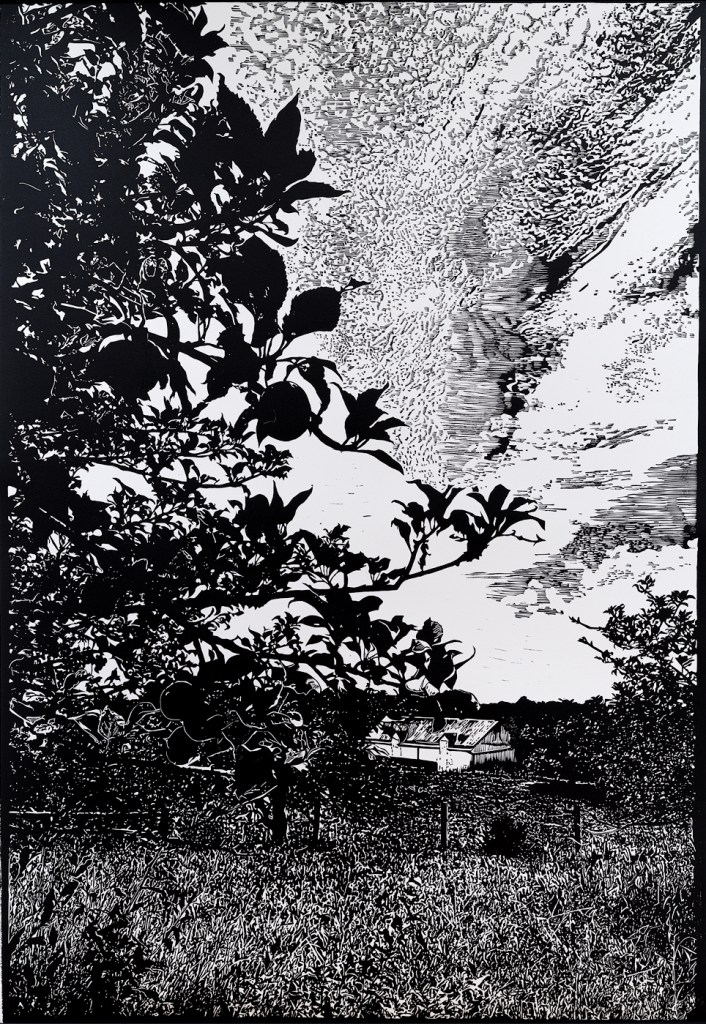
Piper Barn and Apple Orchard
On September 15, 1862, the Piper’s found their residence had been taken over by Confederate Generals. The Pipers had a commercial apple orchard in Washington county at the time of the battle. In 1860, there were six slaves on the farm, five of them children. The Pipers also employed a sixteen-year-old free black farm hand named John Jumper. A storm of loss and destruction would rain down on the Piper Farm on Sept. 16, 1862, but the horror would continue to unfold for years as military occupation and caring for the sick and wounded diminished, food and water supplies into the 1870’s. The National Park Service has replanted a portion of the orchard allowing visitors a glimpse of the past. In a quote from the NPS site “As the seasons, change, the memories of the hardships that the Pipers and their neighbors endured will never be forgotten.”
Linoleum print
30” x 44”
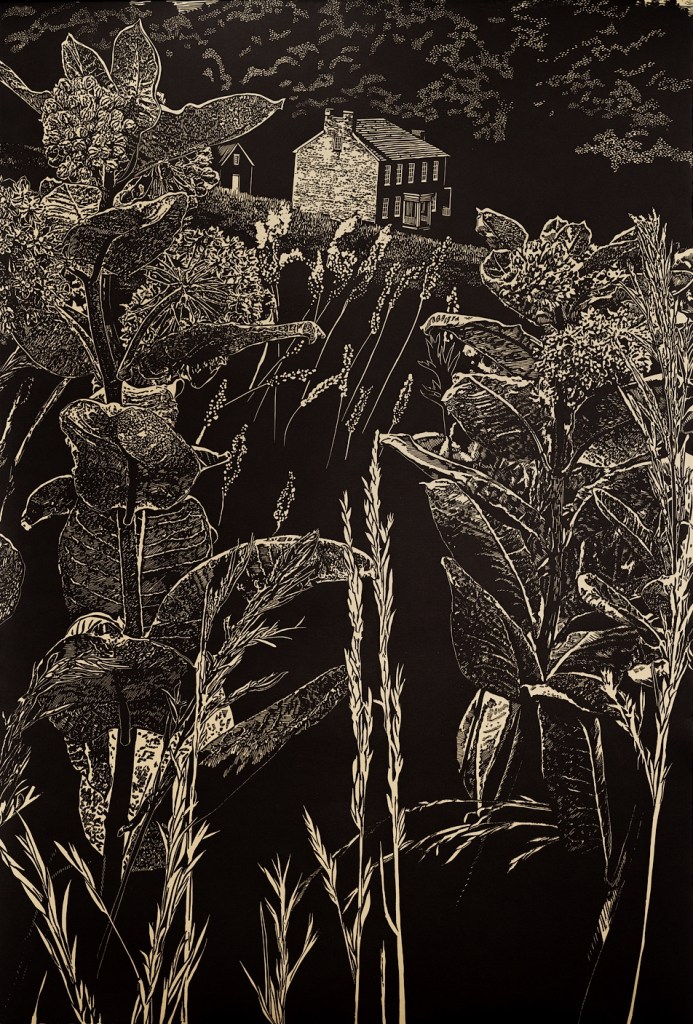
Sherrick Farm
The house Joseph Sherrick Jr. built in the late 1830’s is framed here by Milkweed which grows wild in the fields and symbolizes remembrance, dignity, and freedom. At the time of the battle Sherrick and his family were living in Funkstown, MD. Sherrick invited his good friends the Mumma’s whose house and barn were burned by Confederate soldiers on Sept. 16 to live in his house while they rebuilt. The Union army encamped at the Sherrick Farm after the battle where the barn became a field hospital. The army remained on site for six weeks exhausting all supplies of food for both men and animals. At the Sherrick farm like so many farms in Washington County Maryland the prolonged military encampment was more damaging than the actual battle placing families in hardship well into the 1870’s.
Linoleum print
30” x 44”
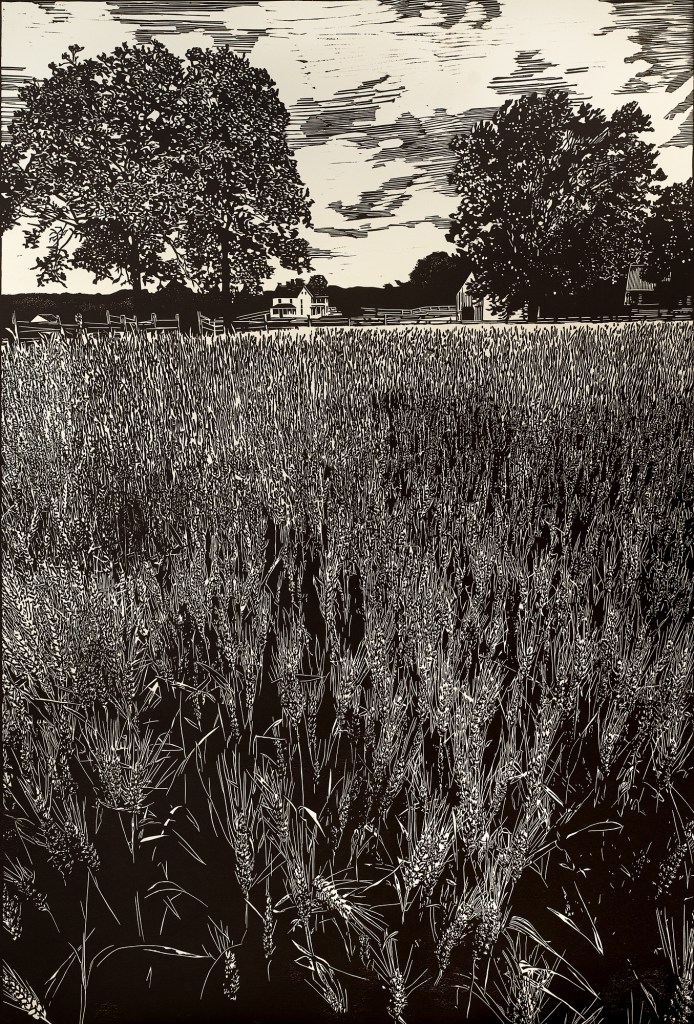
Poffenberger Farm
“After the fighting was over and Lee had retreated across the Potomac, Joseph and Mary Ann returned to their home. They found weary Federal soldiers camping all over their property and discovered that nearly all their belongings stolen or destroyed. Joseph recalled “I returned to my house; it was completely empty. I had nothing left. I lived on army crackers that I found on the battlefield for five days.” The Union army would stay encamped on the Poffenberger property until late October. In that time soldiers continued to devour the stores of food and livestock that belonged to the Poffenberger family.” Quoted from the NPS website.
Linoleum print
30” x 44”
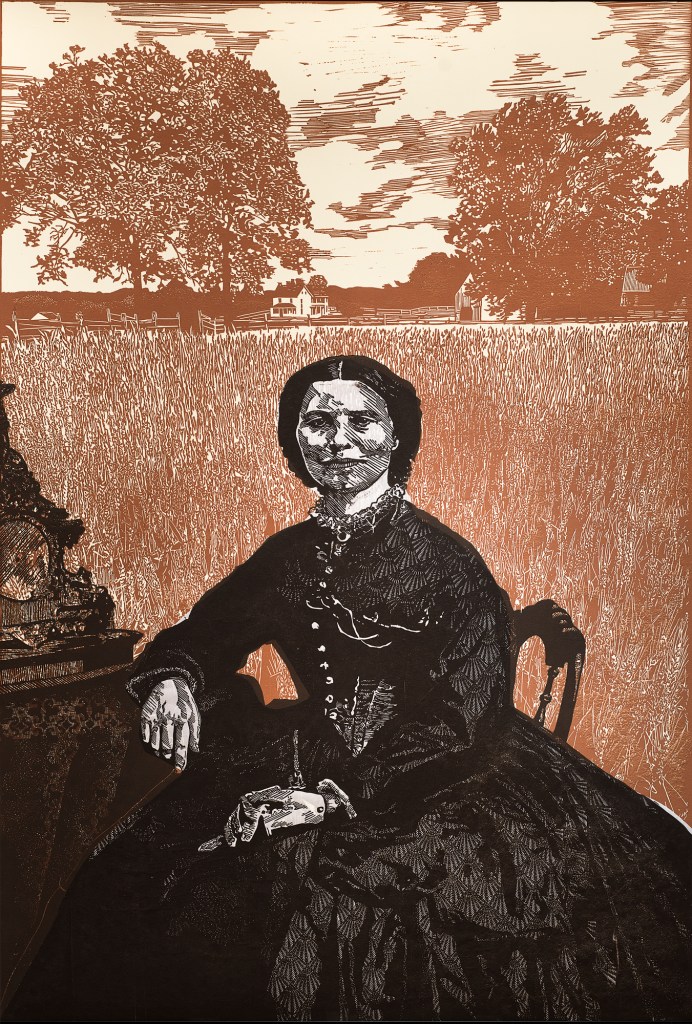
Clara Barton & Poffenberger Farm
Working from a historical photograph of Clara Barton I printed over a previous image of the Poffenberger Farm at Antietam National Battlefield. Ms. Barton was present during the battle on Sept. 16, 1862 tending to the wounded. She reported that while giving aid to a soldier “A ball has passed between my body and the right arm which supported him, cutting through his chest from shoulder to shoulder. There was no more to be done for him and I left him to his rest. I have never mended that hole in my sleeve. I wonder if a soldier ever does mend a bullet hole in his coat?” A monument in her honor stands along the tour road near the Poffenberger Farm.
Linoleum monotype with Chine Colle
30” x 44”
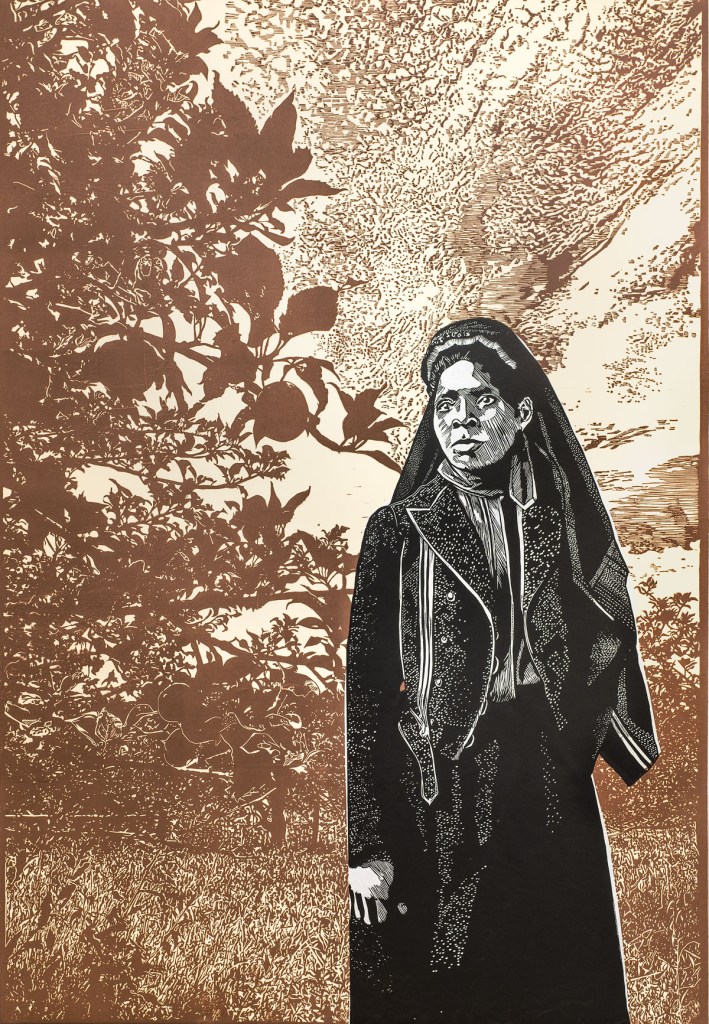
Suzie King Taylor, first African American nurse
Ms. Taylor served with the 33rd U.S. Colored Troops Infantry Regiment during the Civil War. She was originally hired as a laundress she tended the wounded and taught children and adults to read while serving. She stands here in an apple orchard. Apples are symbols of knowledge, healing and nourishment and in this context signify the historical, cultural, and societal diversity of the United States.
Linoleum monotype with Chine Colle
30” x 44”
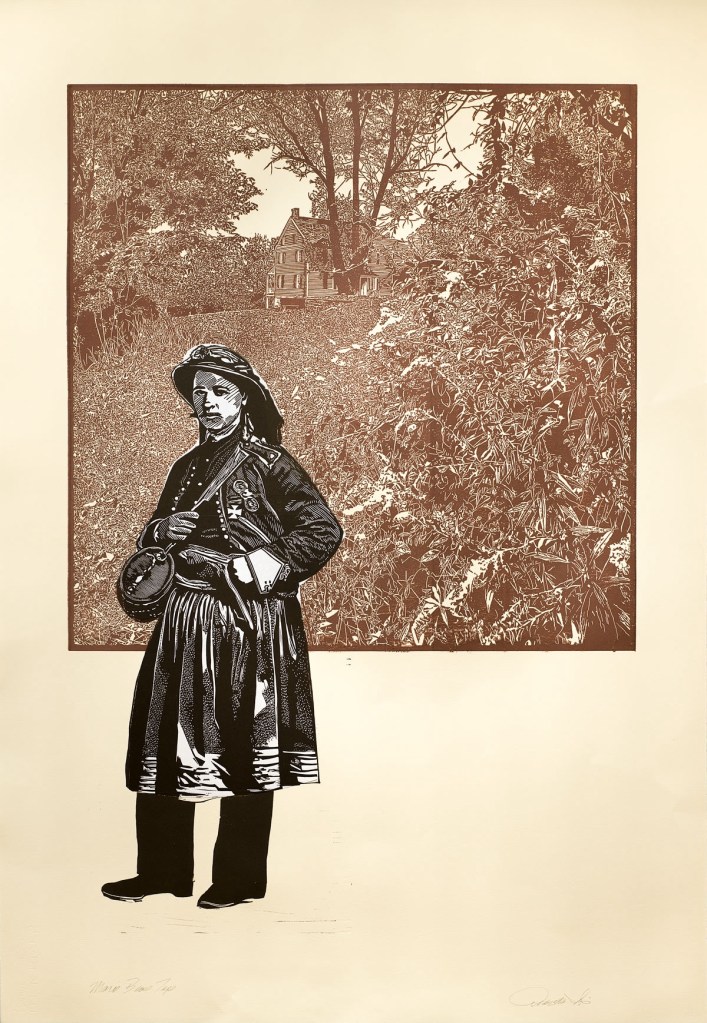
Marie Brose Tepe
Civil War nurse and vivandiere of the 27th PA infantry regiment and 114th PA infantry regiment. Ms. Tepe is wearing a version of the Zouave uniform, and she displays the Kearny Cross awarded for bravery. She holds a barrel canteen and revolver. While she was never at the battle of Antietam I have placed her near the Otto House which is an easy hike to the Zouave Monument where 240 out of 373 Zouaves suffered casualties during the final battle of Antietam.
Linoleum monotype with Chine Colle
30” x 44”
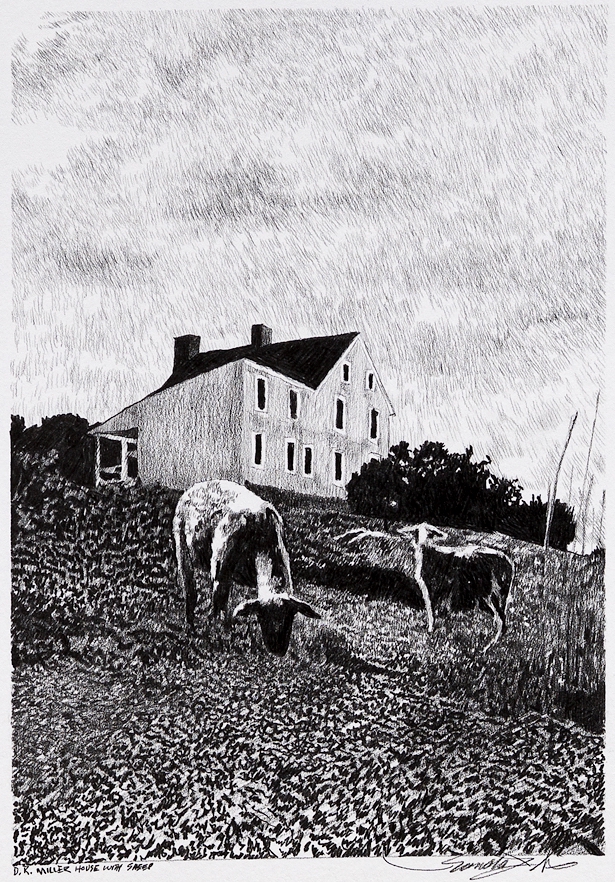
D.R. Miller House and Sheep
Graphite drawing
Image size: 5 ½” w x 8” h
Framed size: 12 ½” w x 16” h

Sherrick Farm
Graphite drawing
Image size: 5” w x 8” h
Framed size: 12 ½” w x 16” h

Stone Spring House
Graphite drawing
Image size: 6” w x 10 1/2” h
Framed size: 13” w x 19” h
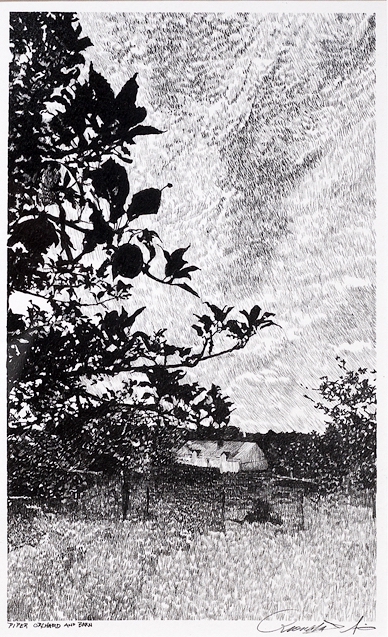
Piper Orchard and Barn
Graphite drawing
Image size: 6” w x 10” h
Framed size: 13” w x 18” h
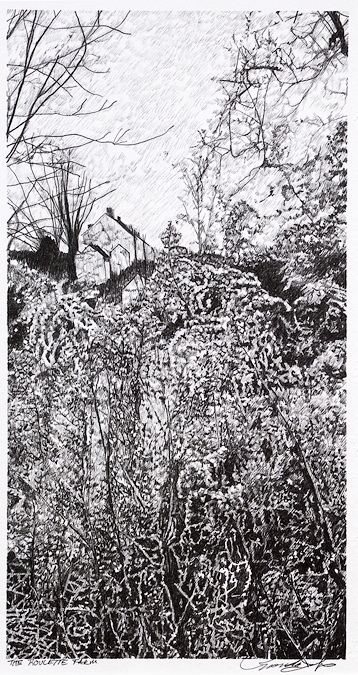
Roulette Farm
Graphite drawing
Image size: 5 12/” w x 10 1/2” h
Framed size: 13” w x 19” h
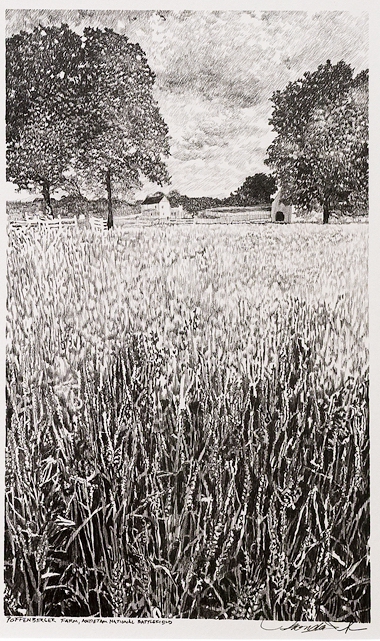
Poffenberger Farm
Graphite drawing
Image size: 6” w x 10” h
Framed size: 13” w x 18” h
 Rhonda J. Smith